$1,889
Lowest-priced AED we sell (HeartSine samaritan 350P)

$2,947
Highest-priced AED for public access (LIFEPAK 1000)

$272 to $553
Replacement battery and pads, every 4 or 5 years
Written by Fahim Ahmad, Distribution & Marketing Manager
Reviewed by Daniel Waslen, Owner
Prices checked on October 26, 2026
Every AED, by Price
Starting prices in Canadian dollars, before tax, with free shipping across Canada. Every AED includes our AED Management Program at no cost.







Why Some AEDs Cost $1,000 More than Others
What pushes the price up:
- Real-time CPR feedback that tells rescuers to push harder or faster
- A built-in child mode instead of separate pediatric pads
- Rugged, water-resistant housing for outdoor or industrial sites
- Wi-Fi or cellular monitoring that reports readiness automatically
- Screens and video guidance for responders
What keeps the price down:
- Combined pad and battery cartrides, one part to replace
- Recertified units
- Bundles that include a cabinet, sign and spare pads
- Bulk orders for several sites at once
- Trading in your old AED for up to $400 in credit
- Our Price Match Guarantee: we match a canadian retailer's price and take off an extra 5%
TCO Examples: Single Site vs. Multi-Site
The following scenarios show what these numbers look like in practice: a single office deploying one device, and a multi-site business standardizing across several locations.
Single-site Office
A mid-sized office installs one Philips HeartStart OnSite. Here is its cost year by year:
- Year 0: $1,939 for the device, plus $200 for a high-visibility wall cabinet — $2,139 upfront
- Year 2: $125 for new pads
- Year 4: $125 for pads plus $269 for a battery — $394
- Year 6: $125 for pads
- Total through year 8: approximately $3,177, or roughly $397 per year on average
Multi-site Rollout
A business with five locations standardizes on the ZOLL AED 3 for its five-year pad-and-battery cycle.
- Upfront (5 units): $12,775 (before volume pricing)
- Consumables through year 8: $2,765 (before volume pricing)
- Consumables through year 10: $5,530 (ZOLL AED 3 replaces consumables every 5 years)
- Included with every unit: the AED Management Program at no additional cost, a relevant consideration when managing maintenance across multiple sites
- Bulk pricing: typically $300 to $400 off for a five-unit order, and $500 or more off for orders beyond five units, with discounts varying by brand. Request a quote through the bulk order form
What Replacement Pads and Batteries Really Cost
Most AEDs require new pads and batteries every 2-5 years. Be sure to factor the cost of replacement parts in your budget.
Here are a few examples of the total cost of ownership of various AEDs across two replacement cycles:

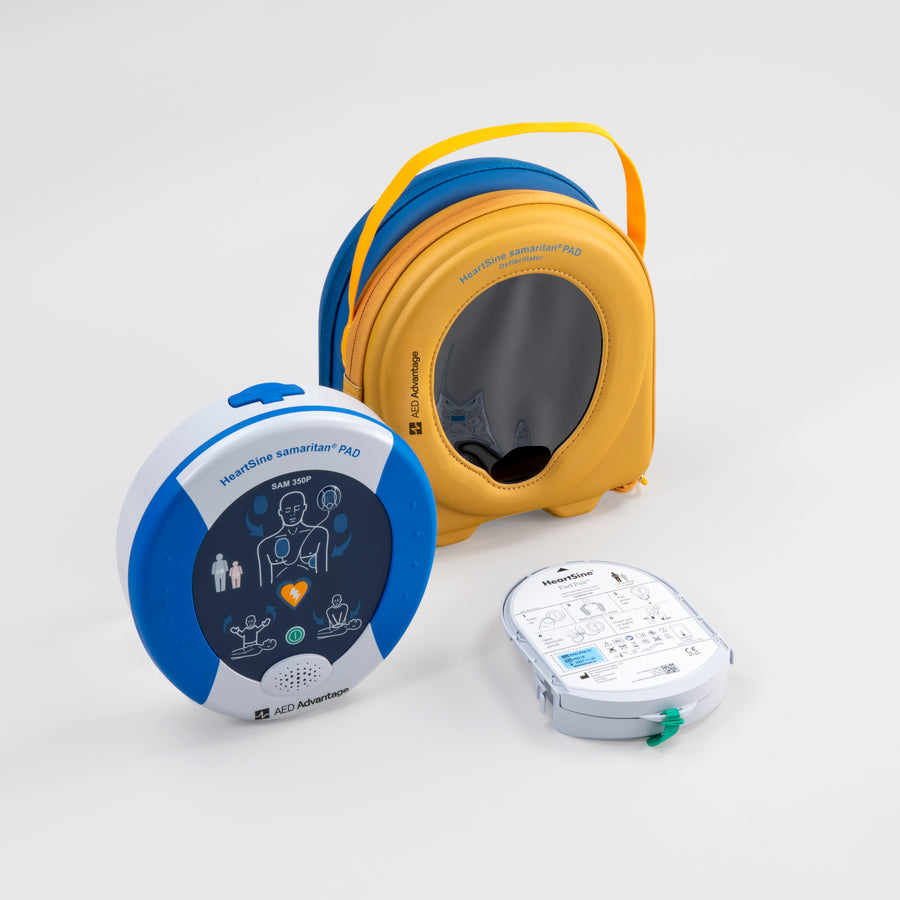
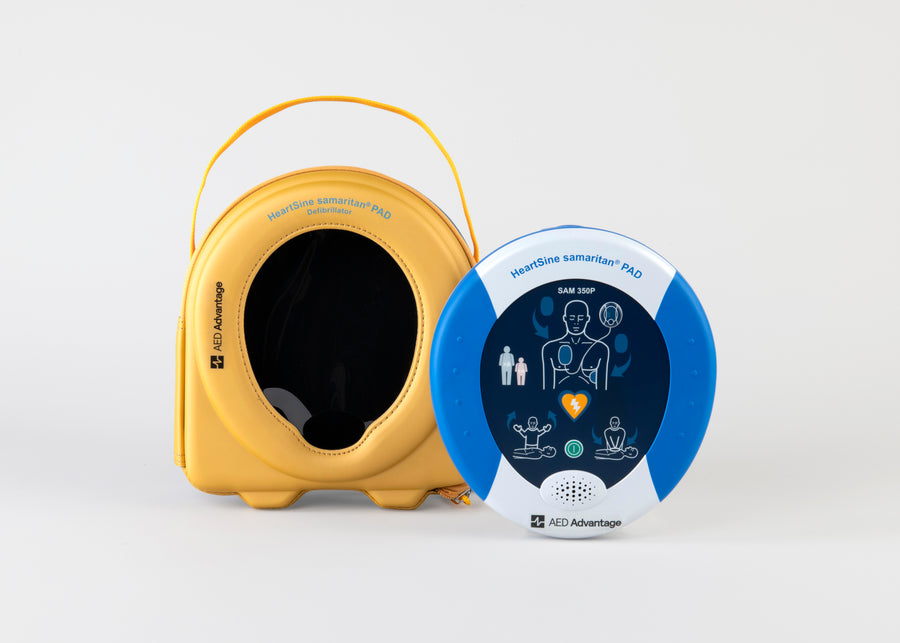
HeartSine samaritan 350P
Pads: $272 every 4 years (Pad-Pak cartridge)
Battery: Included in the Pad-Pak
AED: $1,889
8-year total: $2,433

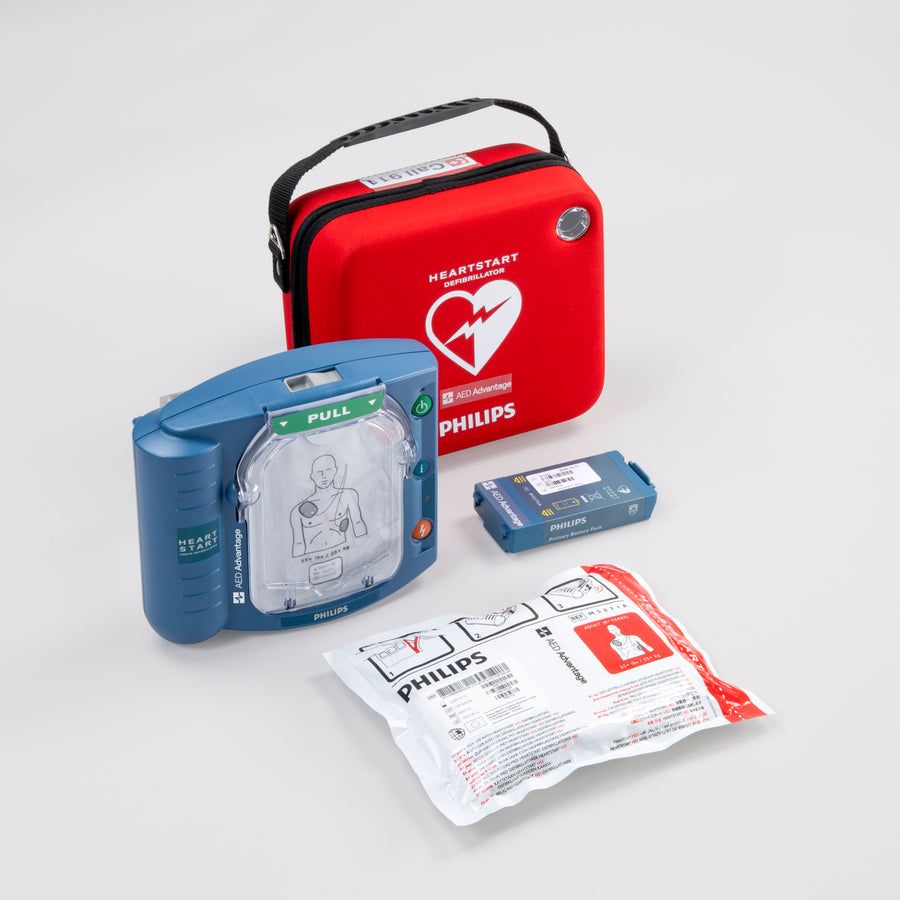
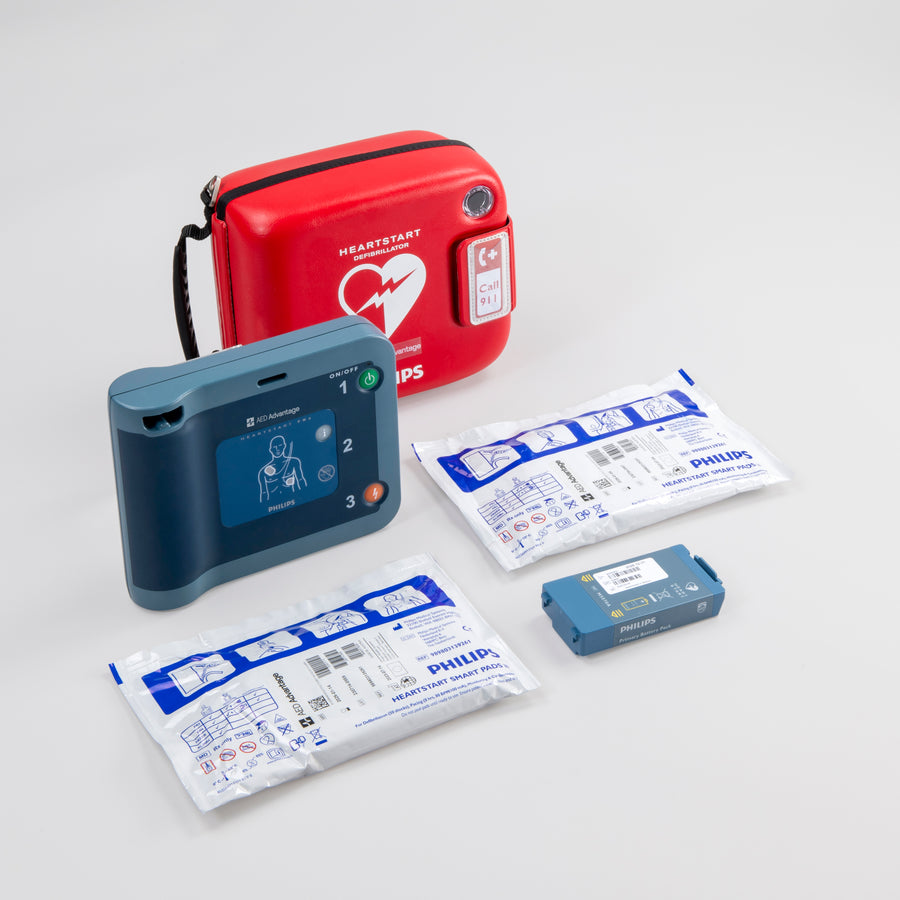
Philips HeartStart OnSite
Pads: $125 every 2 years
Battery: $269 every 4 years
AED: $1,939
8-year total: $2,977

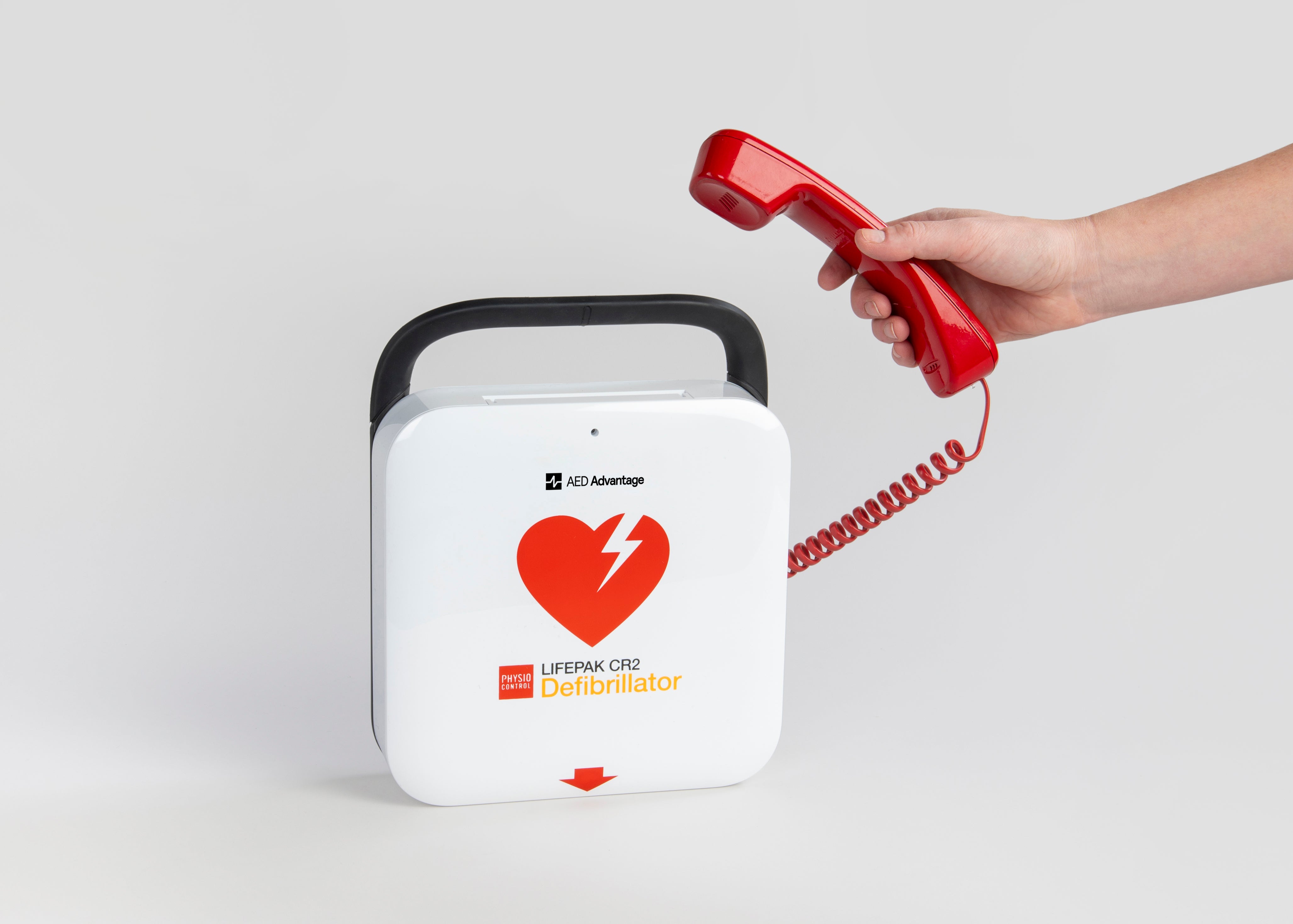
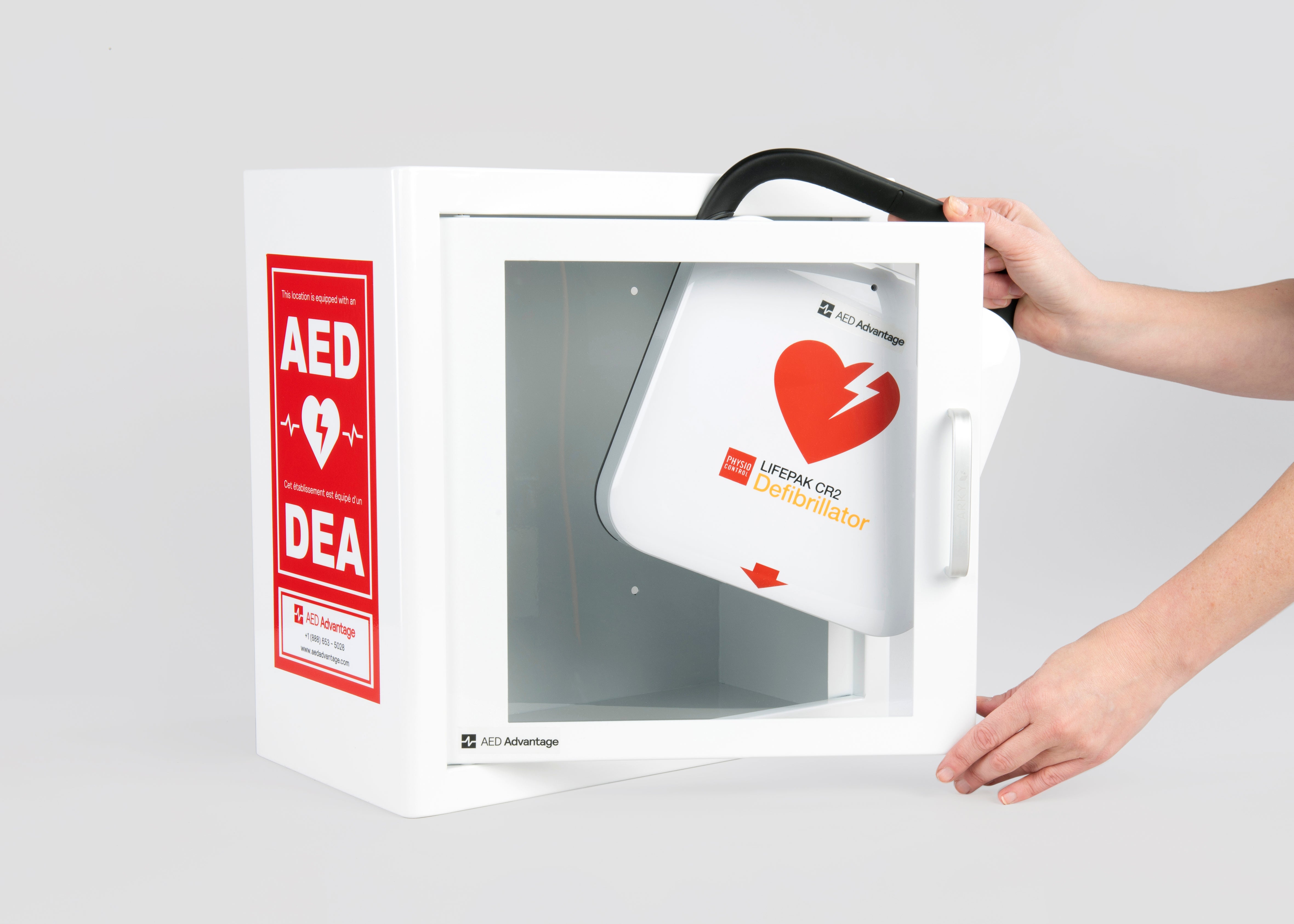
LIFEPAK CR2
Pads: $167 every 4 years
Battery: $377 every 4 years
AED: $2,395
8-year total: $3,483

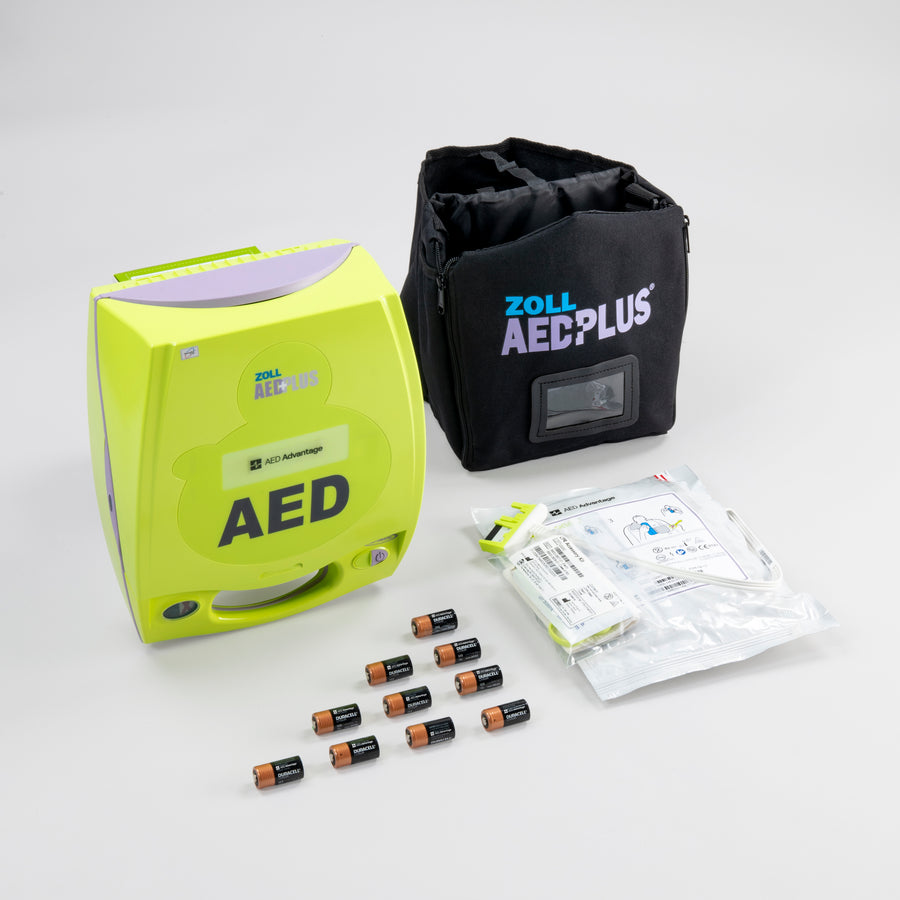
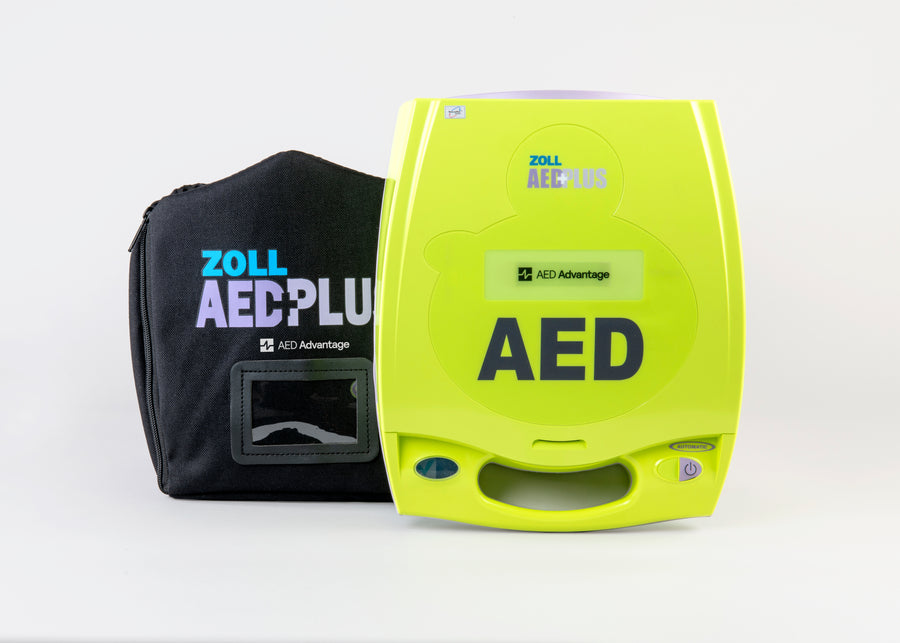
ZOLL AED Plus
Pads: $256 every 5 years
Batteries: $122 every 5 years (set of 10)
AED: $2,265
10-year total: $3,021

ZOLL AED 3
Pads: $289 every 5 years
Battery: $264 every 5 years
AED: $2,555
10-year total: $3,661
Extras Most Buyers Forget to Budget For

Storage Brackets and Cabinets
Wall bracket: $89
Indoor alarmed cabinet: $200
Outdoor cabinet: $605
Heated outdoor cabinet: $705 to $1,018

Child Pads
Philips HeartStart OnSite: $170
ZOLL AED Plus: $161
HeartSine samaritan 350P: $297 (pediatric Pad-Pak)
LIFEPAK CR2: $0, built in child-mode
ZOLL AED 3: $0, built in child-mode

Signage and Rescue Kit
Bilingual wall sign: $19.50
Rescue pak: $25 (razor, scissors and CPR mask, etc.)

Diagnostics and Support
Free with every AED we sell. Monthly reminder emails and free device diagnostics are included.

Shipping
Free on every AED, anywhere in Canada.
Some conditions apply, review our shipping policy here.

Training Equipment
Non-shocking trainers and practice cartridges are optional and priced separately. AED trainers range from $595 to $1,120.
Ways to Lower Your Total Cost
Now that you know what to budget for, here’s how to bring that number down.

Current Promotions
Many AEDs and bundles have a discount that's applied automatically at checkout, with no code needed.
See which models are on special right now.

New vs Recertified
Besides new units, we offer one certified-recertified model: the LIFEPAK CR2 at $1,999, $396 less than new.
Each unit is fully tested with no visible wear, ships with a fresh battery and fresh pads installed, and comes with a certification report on request and a 1-year warranty.

Trade-in Credit
Get up to $400 toward a new AED when you trade in an older or discontinued model.
Trade in today.

Bulk and Multi-Site Orders
Equipping several locations? Our team builds one quote for all of them, with pricing based on your order size.
Fill out our Bulk Order Form to recieve your personalized quote.

WSIB Reimbursement
Coverage varies by province and by employer program. Ontario construction employers implementing AEDs may be able to claim up to $2,500 through WSIB. Confirm with the relevant authority before budgeting.

Tax Treatment
An AED purchase may qualify as a deductible business expense or fall under a capital cost allowance class, depending on business structure and how the purchase is recorded. Confirm with a qualified accountant before filing.
Is an AED Worth It? An Honest Answer
About 60,000 cardiac arrests happen outside hospitals in Canada every year, and only 1 in 10 people survive. Every minute without CPR or an AED lowers a person's chance of survival by about 10%, and using CPR with an AED can double it (Heart & Stroke Foundation). Paramedics often can't arrive within those first minutes. That makes an AED one of the few purchases where the value is measured in a life, not a return.
It isn't worth it if no one maintains it. A $1,900 AED with expired pads won't help anyone. If your budget is tight, choose a lower-priced model you'll keep ready over a premium one you'll forget about.
AED Price FAQs
Standard health insurance usually doesn't cover AEDs. Some businesses can claim them as a workplace safety expense. Ask your accountant.
An AED purchase may qualify as a business expense or fall under a capital cost allowance class, but the correct treatment depends on business structure and how the purchase is recorded. This should be confirmed with your accountant before filing.
The gel on the pads dries out over time, so they stop sticking well and conduct electricity poorly. Most last 2 to 5 years depending on the brand.
Averaged over eight years, most models cost $30 to $85 per year in pads and battery costs, averaging about $60 per year, though this can vary based on usage and model.
Yes. Every AED we sell is Health Canada licensed and built to do the same essential job: analyze the heart’s rhythm and deliver a shock when one is needed. Paying more gets you helpful extras like CPR feedback, a child mode or remote monitoring. The most important thing is having an AED on the wall and ready when someone collapses. Any AED is better than no AED.
Shipping is free on every AED across Canada. Our specialists help you set it up by phone at no cost.
Our team takes the time to set up every AED before it's shipped. Your AED is ready to go out of the box. You get unlimited access to our AED specialists for remote diagnostics and support.
Yes. If a Canadian retailer lists the same brand and model for less, we'll match it and take off an extra 5%.